
Introduction
In the realm of industrial piping solutions, the choice between seamless and welded pipes is a critical decision that can significantly impact the performance, safety, and cost-effectiveness of a project. While welded pipes have their own set of advantages, seamless steel pipes stand out due to their unique characteristics and numerous benefits. This article delves deeper into the advantages of seamless steel pipes over their welded counterparts, exploring how these benefits translate into improved operational efficiency and reduced long-term costs.
1. Higher Strength and Pressure Resistance
1.1 The Structural Integrity of Seamless Pipes
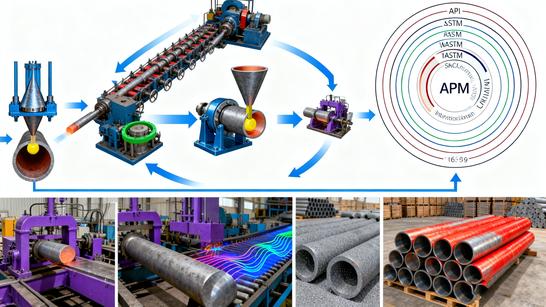
Seamless pipes are manufactured without any welded joints, which means they are a single, continuous piece of metal. This inherent structural integrity gives seamless pipes a significant advantage in terms of strength and pressure resistance. In contrast, welded pipes are created by joining two or more sections of metal through welding, which can introduce weak points at the joints. These weak points are potential failure zones under high pressure or stress conditions.
1.2 Applications in High-Pressure Environments
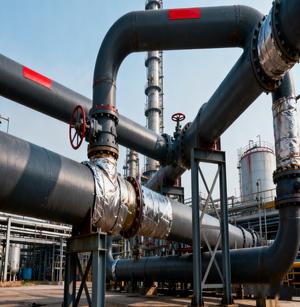
The superior strength and pressure resistance of seamless pipes make them ideal for high-pressure applications. For instance, in the oil and gas industry, where pipes are subjected to extreme pressures during transportation and processing, seamless pipes are the preferred choice. They can withstand the high internal pressures without leaking or bursting, ensuring the safe and efficient transfer of fluids. Similarly, in pressure vessel piping, where the integrity of the piping system is crucial for the safety of the entire setup, seamless pipes provide a reliable solution.
1.3 Reduced Risk of Failure
The absence of welded joints in seamless pipes also reduces the risk of failure due to fatigue or stress corrosion cracking. Welded joints are more susceptible to these types of failures because the heat-affected zone around the weld can have different mechanical properties than the base metal. Over time, this can lead to the initiation and propagation of cracks, ultimately resulting in pipe failure. Seamless pipes, being free from such joints, are less prone to these issues, offering a more reliable and long-lasting piping solution.
2. Enhanced Durability and Longevity
2.1 Uniform Grain Structure
Seamless pipes are manufactured through a process that results in a uniform grain structure throughout the pipe. This uniformity contributes to the pipe's overall strength and durability. In contrast, welded pipes may have a non-uniform grain structure around the weld area, which can affect the pipe's mechanical properties and make it more susceptible to wear and tear.
2.2 Resistance to Fatigue and Corrosion
The uniform grain structure and lack of welds in seamless pipes also enhance their resistance to fatigue and corrosion. Fatigue is a common problem in piping systems, especially those subjected to cyclic loading. Seamless pipes, with their uniform structure, are better able to withstand such loading without developing cracks or other defects. Additionally, the absence of welds reduces the number of potential corrosion sites, as welds can often be areas where corrosion initiates and propagates.
2.3 Reduced Maintenance and Replacement Costs
Due to their enhanced durability and longevity, seamless pipes require less maintenance and replacement over their lifespan. This translates into significant cost savings for industries that rely heavily on piping systems. For example, in the chemical processing industry, where pipes are exposed to corrosive substances, seamless pipes can provide a more cost-effective solution by reducing the frequency of pipe replacements and the associated downtime.
3. Improved Flow Characteristics
3.1 Smooth Inner Surface
One of the most noticeable advantages of seamless pipes is their smooth inner surface. This smoothness is a result of the manufacturing process, which ensures that the inner diameter of the pipe is consistent throughout its length. In contrast, welded pipes may have irregularities at the weld joints, which can disrupt the flow of fluids.
3.2 Reduced Friction and Turbulence
The smooth inner surface of seamless pipes reduces friction and turbulence as fluids flow through the pipe. This is particularly important in applications where fluid flow efficiency is critical, such as in hydraulic systems or fluid transportation networks. Reduced friction means that less energy is required to pump the fluid through the pipe, resulting in lower operating costs. Additionally, reduced turbulence can help prevent the formation of eddies and vortices, which can lead to erosion and wear on the pipe walls.
3.3 Improved System Performance
The improved flow characteristics of seamless pipes can lead to overall improvements in system performance. For example, in a hydraulic system, the use of seamless pipes can result in more precise control of fluid flow, leading to better system responsiveness and accuracy. Similarly, in a fluid transportation network, seamless pipes can help ensure a consistent and reliable supply of fluids, reducing the risk of disruptions or downtime.
4. Versatility and Customization
4.1 Wide Range of Sizes, Shapes, and Materials
Seamless pipes offer greater versatility and customization options compared to welded pipes. They can be manufactured in a wide range of sizes, shapes, and materials to meet specific application requirements. For example, seamless pipes can be produced in different diameters and wall thicknesses to suit various pressure and flow rate requirements. Additionally, they can be made from a variety of materials, including carbon steel, stainless steel, and alloy steel, to provide the necessary corrosion resistance or mechanical properties for a given application.
4.2 Ease of Fabrication
Seamless pipes can also be easily cut, bent, and welded to fit into complex piping systems. This ease of fabrication makes them suitable for a variety of industrial settings, from simple piping networks to more complex systems with multiple bends and connections. In contrast, welded pipes may require more extensive fabrication work to achieve the same level of customization, which can increase costs and lead times.
4.3 Adaptability to Changing Requirements
The versatility and customization options of seamless pipes also make them adaptable to changing requirements. As industrial processes evolve and new technologies emerge, the piping systems may need to be modified or expanded. Seamless pipes can be easily integrated into existing systems or used to create new systems that meet the new requirements, providing a flexible and cost-effective solution.
Conclusion
In conclusion, seamless steel pipes offer several distinct advantages over their welded counterparts. Their higher strength and pressure resistance, enhanced durability and longevity, improved flow characteristics, and versatility and customization options make them the preferred choice for many industrial applications. While welded pipes may have their own set of advantages in certain situations, the benefits of seamless pipes are undeniable, especially in applications where safety, reliability, and efficiency are of utmost importance. As industries continue to evolve and demand more from their piping systems, the use of seamless steel pipes is likely to increase, further solidifying their position as a leading piping solution.
[Back to Seamless Steel Pipes: Construction, Manufacturing, and Applications]