
Introduction
Seamless pipes stand out in the industrial landscape for their exceptional strength, durability, and capacity to endure high pressures. These attributes make them indispensable in a wide range of applications, from construction and automotive industries to oil and gas transportation. But how exactly are these remarkable pipes manufactured? This comprehensive guide delves into the intricate process of making seamless pipes, from the initial selection of raw materials to the final inspection stages.
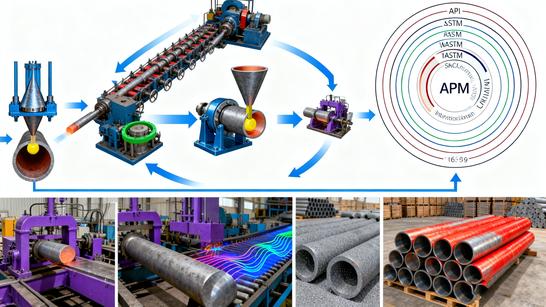
1. Raw Material Selection
The journey of crafting a seamless pipe commences with the meticulous selection of high-quality steel billets. These billets, the foundational blocks of seamless pipe production, are typically forged from carbon steel or alloy steel. The choice between carbon steel and alloy steel hinges on the desired properties of the final pipe, such as corrosion resistance, tensile strength, and thermal stability.
Before entering the production line, each billet undergoes a rigorous inspection process. Specialists scrutinize the billets for any defects, impurities, or inconsistencies that could compromise the quality of the finished product. Even minute flaws can lead to significant issues down the line, affecting the pipe's performance and longevity. Therefore, only billets that meet stringent quality standards are cleared for further processing.
2. Heating and Piercing
Once the billets pass inspection, they are transported to a furnace where they are heated to extremely high temperatures, typically exceeding 1,000 degrees Celsius.This heating process renders the steel malleable, making it easier to shape and form. The transformation from a solid billet to a workable material is crucial for the subsequent piercing step.
After reaching the desired temperature, the heated billet is transferred to a piercing mill. Here, a specialized tool pierces the center of the billet, creating a hollow tube.This hollow tube, albeit crude in appearance, marks the genesis of the seamless pipe. The piercing process requires precision and control, as any deviations can affect the uniformity and quality of the tube.
3. Rolling and Sizing
With the hollow tube created, the next step involves elongating and shaping it through a series of rolling and sizing processes.Hot rolling takes center stage in this phase, utilizing rolling mills equipped with precision-engineered rollers to gradually reduce the diameter and increase the length of the tube. The hot rolling process not only shapes the tube but also refines its microstructure, enhancing its mechanical properties.
Following hot rolling, some pipes may undergo cold drawing for more precise sizing and improved surface finish.Cold drawing involves pulling the hot-rolled pipe through a die, a precisely machined opening that imparts the desired shape and size to the pipe. This process eliminates surface imperfections and ensures that the pipe meets the exact specifications for diameter, wall thickness, and length.
4. Heat Treatment and Inspection
After the rolling and sizing processes, the seamless pipe may undergo heat treatment to further enhance its mechanical properties.Annealing, normalizing, and quenching are common heat treatment techniques employed to relieve internal stresses, improve ductility, and refine the grain structure of the pipe. These treatments are tailored to the specific requirements of the application, ensuring that the pipe performs optimally under varying conditions.
The final step in the manufacturing process involves a thorough inspection of the seamless pipe. Non-destructive testing methods, such as ultrasonic testing and radiographic testing, are utilized to detect any defects, cracks, or inclusions that may have escaped earlier detection. Only pipes that pass these stringent inspections are deemed suitable for use, ensuring the highest quality and reliability in the final product.
The manufacturing process of seamless pipes is a testament to human ingenuity and technological advancement. From the careful selection of raw materials to the precise rolling and sizing operations, every step is meticulously planned and executed to produce pipes of exceptional quality. The applications of seamless pipes are vast and varied, spanning industries such as construction, automotive, oil and gas, and more. Their strength, durability, and ability to withstand high pressures make them the preferred choice for critical applications where safety and reliability are paramount.
In conclusion, the manufacturing of seamless pipes is a complex yet fascinating process that combines art and science. By understanding the intricacies of this process, we gain a deeper appreciation for the pipes that form the backbone of our modern infrastructure.
[Back to Seamless Steel Pipes: Construction, Manufacturing, and Applications]