
Introduction
In the realm of industrial piping systems, stainless steel seamless pipes stand out as a premier choice, particularly in environments where corrosion poses a significant threat. Their exceptional corrosion resistance, coupled with robust mechanical properties, makes them indispensable across a wide range of industries. This article delves into the intricate properties of stainless steel seamless pipes, explores their manufacturing process in detail, and highlights their diverse applications, underscoring their importance in modern industrial settings.
1.Properties and Manufacturing Process
1.1 Corrosion Resistance: The Hallmark of Stainless Steel
The primary allure of stainless steel seamless pipes lies in their remarkable corrosion resistance, a trait attributed to the presence of chromium in their composition. Chromium, when exposed to oxygen, forms a thin, invisible, yet highly protective passive oxide layer on the surface of the steel. This layer acts as a barrier, preventing further oxidation and corrosion, even in harsh environments.
The corrosion resistance of stainless steel seamless pipes can be further enhanced by adding other elements such as nickel, molybdenum, and nitrogen. Nickel improves the pipe's resistance to acidic and alkaline solutions, while molybdenum enhances its pitting and crevice corrosion resistance, particularly in chloride-rich environments like seawater. Nitrogen, on the other hand, increases the pipe's strength and corrosion resistance at elevated temperatures.
1.2 Manufacturing Process: Ensuring Uniformity and Strength
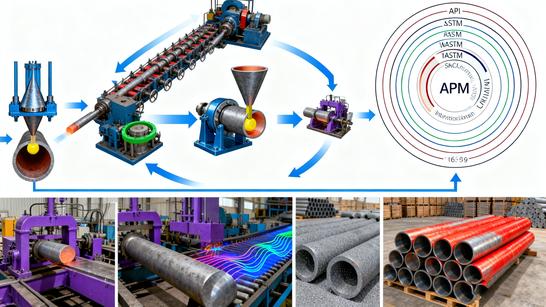
The manufacturing of stainless steel seamless pipes involves a meticulous process that ensures uniformity, strength, and high-quality surface finish. The process typically begins with the selection of high-grade stainless steel billets, which are then heated to a specific temperature to make them malleable.
Hot Rolling: The heated billet is passed through a series of rolls to form a hollow tube. This hot-rolling process not only shapes the billet but also refines its grain structure, improving the pipe's mechanical properties. The hot-rolled tube, known as a "mother tube," serves as the starting point for further processing.
Cold Drawing: The mother tube is then subjected to cold drawing, a process where it is pulled through a die to reduce its diameter and increase its length. Cold drawing imparts a smooth surface finish to the pipe and enhances its dimensional accuracy. It also work-hardens the steel, increasing its tensile strength and yield strength.
Heat Treatment: After cold drawing, the pipe may undergo heat treatment, such as annealing or quenching and tempering, to relieve internal stresses, improve ductility, and adjust mechanical properties as required. This step ensures that the pipe meets the specified standards for strength and toughness.
Inspection and Testing: The final step in the manufacturing process involves rigorous inspection and testing to ensure that the pipe meets all quality and safety requirements. This includes visual inspection for surface defects, dimensional checks for accuracy, and non-destructive testing methods like ultrasonic testing or eddy current testing to detect internal flaws.
2.Applications
The exceptional corrosion resistance and mechanical properties of stainless steel seamless pipes make them suitable for a wide range of applications across various industries. Here are some of the key sectors where these pipes find extensive use.
2.1 Chemical Industry: Transporting Corrosive Chemicals and Acids
In the chemical industry, where the handling of corrosive chemicals and acids is routine, stainless steel seamless pipes are the preferred choice. Their ability to withstand the corrosive effects of these substances ensures safe and efficient transportation, minimizing the risk of leaks and spills that could lead to environmental contamination or workplace accidents.
2.2 Food Processing: Ensuring Hygiene and Preventing Contamination
In the food processing industry, hygiene is of paramount importance. Stainless steel seamless pipes, with their smooth surface finish and resistance to corrosion and bacterial growth, are ideal for transporting food products, beverages, and ingredients. They ensure that the products remain uncontaminated throughout the processing and packaging stages, maintaining their quality and safety for consumption.
2.3 Marine Applications: Withstanding Saltwater Corrosion
The marine environment is notoriously harsh, with saltwater posing a significant corrosion threat to metal structures. Stainless steel seamless pipes, with their excellent resistance to saltwater corrosion, are widely used in marine applications such as shipbuilding, offshore oil and gas platforms, and desalination plants. They ensure the longevity and reliability of these structures, even in the most challenging marine conditions.
2.4 Pharmaceutical Industry: Maintaining Purity and Sterility
In the pharmaceutical industry, where the purity and sterility of products are critical, stainless steel seamless pipes play a vital role. They are used to transport pharmaceutical ingredients, intermediates, and finished products, ensuring that they remain free from contamination throughout the manufacturing process. The pipes' smooth surface finish and resistance to corrosion and bacterial growth make them ideal for maintaining the high standards of hygiene required in pharmaceutical production.
2.5 Power Generation: Handling High-Temperature and Corrosive Fluids
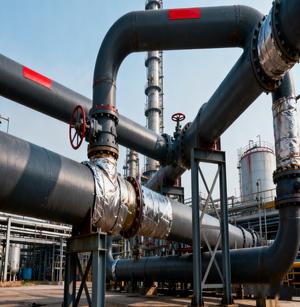
In power generation plants, stainless steel seamless pipes are used to transport high-temperature and corrosive fluids such as steam, hot water, and chemical solutions. Their ability to withstand extreme temperatures and corrosive environments ensures the efficient and safe operation of power generation equipment, minimizing downtime and maintenance costs.
Conclusion
Stainless steel seamless pipes, with their exceptional corrosion resistance, robust mechanical properties, and versatile applications, are a cornerstone of modern industrial piping systems. Their durability, uniformity, and cost-effectiveness make them an ideal choice for long-term applications in industries where exposure to corrosive substances is common. As technology continues to advance, the manufacturing processes and properties of stainless steel seamless pipes are likely to improve further, expanding their range of applications and solidifying their position as a premier choice in industrial piping. [Back to Pillar Article: Comprehensive Guide to Seamless Steel Pipes]