
Introduction
Large diameter seamless pipes play a pivotal role in numerous infrastructure projects, particularly those involving high-capacity fluid transportation such as oil and gas pipelines, water supply systems, and thermal power plants. These pipes, characterized by their seamless construction and substantial diameters, offer superior strength, durability, and flow efficiency compared to their welded counterparts. However, the manufacturing, installation, and maintenance of large diameter seamless pipes present unique engineering challenges that must be addressed to ensure their reliable and efficient operation. This article delves into these challenges and provides practical solutions to overcome them.
1.Engineering Challenges
1.1 Manufacturing Challenges
Producing large diameter seamless pipes with uniform wall thickness and consistent mechanical properties is a formidable task. The manufacturing process must ensure that the pipe maintains its structural integrity and performance across its entire length, despite the inherent difficulties in controlling material flow and cooling rates during production.
Uniform Wall Thickness: Achieving uniform wall thickness in large diameter pipes is challenging due to the larger cross-sectional area and the potential for material segregation during the manufacturing process. Non-uniform wall thickness can lead to stress concentrations, reducing the pipe's fatigue life and increasing the risk of failure under pressure.
Consistent Mechanical Properties: Ensuring consistent mechanical properties, such as tensile strength, yield strength, and ductility, throughout the pipe is crucial for its performance in service. Variations in mechanical properties can differences in cooling rates, heat treatment, or material composition, leading to localized weaknesses and potential failure points.
Surface Quality: The surface quality of large diameter seamless pipes must be high to minimize the risk of corrosion and wear. Surface defects, such as cracks, pits, or scale, can act as initiation sites for corrosion and fatigue, compromising the pipe's long-term integrity.
1.2 Installation Challenges
Handling and installing heavy large diameter seamless pipes without damaging them is another significant challenge. The pipes' substantial weight and size make them difficult to maneuver, requiring specialized equipment and techniques to ensure safe and efficient installation.
Handling and Lifting: Large diameter pipes are heavy and cumbersome, making them challenging to handle and lift. Improper handling can result in damage to the pipe's surface or structure, compromising its integrity and performance.
Alignment and Joining: Aligning and joining large diameter pipes accurately is essential for maintaining the integrity of the pipeline system. Misalignment or improper joining techniques can lead to leaks, reduced flow efficiency, and increased stress on the pipes.
Site Conditions: The installation site's conditions, such as terrain, accessibility, and weather, can pose additional challenges. Uneven terrain, limited access, or adverse weather conditions can complicate the installation process and increase the risk of accidents or damage to the pipes.
1.3 Maintenance Challenges
Ensuring the long-term integrity and preventing leaks in large diameter seamless pipes require regular maintenance and inspection. However, the pipes' size and location can make maintenance activities difficult and time-consuming.
Inspection Accessibility: Accessing the entire length of a large diameter pipe for inspection can be challenging, particularly if the pipe is buried underground or installed in a confined space. Limited accessibility can delay the detection of potential issues, increasing the risk of failure.
Corrosion Protection: Large diameter pipes are often exposed to corrosive environments, such as soil, water, or chemicals, which can lead to corrosion and degradation over time. Implementing effective corrosion protection measures is essential for maintaining the pipe's integrity and extending its service life.
Repair and Replacement: Repairing or replacing damaged sections of a large diameter pipe can be costly and time-consuming, particularly if the pipe is part of a critical infrastructure system. Minimizing the need for repairs and replacements through proactive maintenance is crucial for reducing downtime and costs.
2.Solutions
2.1 Advanced Manufacturing Techniques
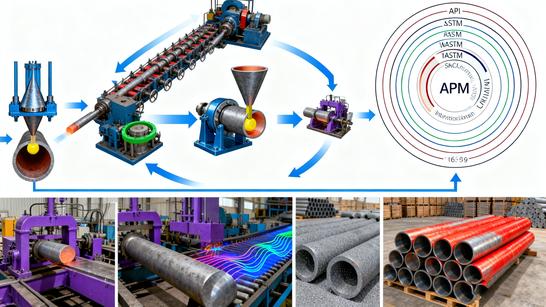
Using advanced manufacturing techniques, such as hot rolling and extrusion processes, can help achieve uniform wall thickness and consistent mechanical properties in large diameter seamless pipes.
Hot Rolling Process: Hot rolling involves heating a solid billet and then rolling it into a pipe shape at high temperatures. This process allows for better control over material flow and cooling rates, resulting in pipes with uniform wall thickness and consistent mechanical properties.
Extrusion Process: Extrusion involves forcing a heated billet through a die to form a pipe shape. This process can produce pipes with precise dimensions and high surface quality, reducing the need for subsequent machining or finishing operations.
Heat Treatment: Heat treatment, such as annealing or quenching and tempering, can be used to improve the mechanical properties of large diameter seamless pipes. By controlling the heating and cooling rates, heat treatment can enhance the pipe's strength, ductility, and toughness.
2.2 Specialized Handling Equipment
Employing cranes and lifting gear designed specifically for heavy pipes can facilitate safe and efficient handling and installation of large diameter seamless pipes.
Cranes and Hoists: Using cranes and hoists with sufficient lifting capacity and reach can ensure that large diameter pipes are lifted and positioned accurately without damage.
Pipe Handling Systems: Pipe handling systems, such as pipe rollers or pipe stands, can be used to support and rotate pipes during installation, reducing the risk of damage and improving alignment accuracy.
Protective Covers and Padding: Using protective covers and padding on lifting gear and handling equipment can prevent damage to the pipe's surface during handling and installation.
2.3 Regular Inspection and Maintenance
Implementing a proactive maintenance schedule that includes regular inspection, cleaning, and corrosion protection measures can help detect and repair issues early, ensuring the long-term integrity of large diameter seamless pipes.
Non-Destructive Testing (NDT): Using NDT techniques, such as ultrasonic testing, radiographic testing, or magnetic particle inspection, can detect internal and surface defects in large diameter pipes without damaging them. Regular NDT inspections can identify potential issues early, allowing for timely repairs or replacements.
Cleaning and Descaling: Regular cleaning and descaling of large diameter pipes can remove dirt, debris, and scale that can accumulate over time, reducing the risk of corrosion and improving flow efficiency.
Corrosion Protection Measures: Implementing corrosion protection measures, such as coating the pipe's surface with protective coatings or using cathodic protection systems, can extend the pipe's service life by preventing corrosion and degradation.
Conclusion
Large diameter seamless pipes are critical components of various infrastructure projects, and addressing their engineering challenges is essential for ensuring their reliable and efficient operation. By employing advanced manufacturing techniques, specialized handling equipment, and regular inspection and maintenance practices, engineers and project managers can overcome the challenges associated with large diameter seamless pipes and ensure their long-term integrity and performance. 【Back to Pillar Article: Comprehensive Guide to Seamless Steel Pipes】