
Introduction: The Veins of Our World
In the vast expanse of modern civilization, from the towering skyscrapers that punctuate city skylines to the intricate networks beneath our feet, lies an unseen yet indispensable force: seamless steel pipes.These conduits, often hidden from view, form the circulatory system of industry and society, carrying energy, fluids, and information that power our daily lives. This article delves into how seamless pipe innovation, far beyond being a mere product, has evolved into an enabler of human progress, shaping the very fabric of our world.[Link to Beyond the Blueprint: The Philosophy of ‘Seamlessness’ in Material Engineering ]
1.The Integrity Imperative – Why ‘Seamless’ Matters
At the core of critical infrastructure and industrial applications lies a fundamental requirement that transcends mere functionality: structural integrity.In an era where technological advancements push the boundaries of what is possible, the reliability of components becomes paramount. Nowhere is this more evident than in environments characterized by relentless fluctuations in pressure, temperature, and stress—conditions that can exploit any weak point, leading to catastrophic failure. It is within this context that seamless steel pipes emerge as not just a product, but a cornerstone of engineering excellence.
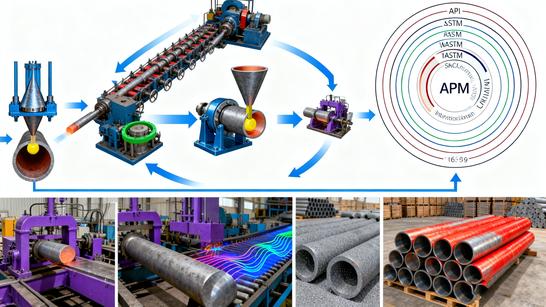
Seamless steel pipes, crafted through a meticulous and highly controlled metallurgical process, represent a pinnacle of manufacturing precision.Unlike their welded counterparts, which are formed by joining sections of metal through fusion—a process inherently prone to introducing potential points of failure at the seams—seamless pipes are created in a single, continuous operation. This process begins with a solid billet of steel, which is then transformed into a hollow shell through a series of carefully orchestrated steps that include heating, piercing, and rolling. The result is a pipe that boasts uniform strength throughout its structure, devoid of the weak points that can compromise the integrity of welded pipes under extreme conditions.
The superiority of seamless pipes in terms of pressure containment is particularly noteworthy. In applications such as oil and gas exploration, where pipes are subjected to immense pressures at great depths, the ability to withstand these forces without failure is critical. Similarly, in aerospace and deep-sea exploration, where the margins for error are razor-thin, the uniform strength and corrosion resistance of seamless pipes make them the default choice. The absence of seams eliminates the risk of weld failure, a concern that can never be entirely mitigated in welded pipes, no matter how advanced the welding technique.
But the philosophy of “seamlessness” extends far beyond the physical attributes of the pipe itself. It embodies a culture of reliability and durability that permeates every aspect of its production and application.Choosing seamless pipes is not merely a technical decision; it is a statement of intent, a commitment to excellence that resonates throughout the supply chain. Manufacturers who produce seamless pipes adhere to stringent quality control measures, ensuring that each pipe meets the highest standards of performance and reliability. This culture of excellence is mirrored in the industries that rely on seamless pipes, where safety and efficiency are non-negotiable.
In safety-critical applications, such as nuclear power plants or chemical processing facilities, the consequences of a pipe failure can be dire. Here, the choice of seamless pipes is not just preferable; it is imperative. The ability to withstand extreme conditions without compromising structural integrity is a prerequisite, and seamless pipes deliver on this front time and again. Their track record of performance in these demanding environments speaks volumes, cementing their status as the gold standard in pipe technology.[Link to The Silent Endurance: How Seamless Pipes Withstand the Tests of Time, Pressure, and Temperature ]
In conclusion, the integrity imperative underscores why “seamless” matters in critical infrastructure and industrial applications.The meticulous process of creating seamless steel pipes, their superior strength and pressure containment, and the culture of reliability they embody make them indispensable in environments where failure is not an option. As industries continue to push the boundaries of what is possible, seamless pipes will remain at the forefront, enabling progress and ensuring safety in the most challenging of conditions.
2.The Duality of Scale – From Mammoth to Minute
Seamless pipe technology stands as a testament to engineering's ability to transcend the boundaries of scale, seamlessly bridging the gap between the colossal and the minuscule. This duality of scale presents a fascinating paradox within the realm of material engineering, where the same foundational principles give rise to products of vastly differing dimensions, each tailored to meet specific and often extreme demands.
On one end of the spectrum, we encounter the giants of infrastructure—extra-large diameter seamless pipes. These behemoths are the backbone of massive construction projects, from offshore oil and gas platforms that brave the harshest海洋环境 (though "oceanic environments" is implied here for context, the original text remains concise) to bridge piles that anchor monumental structures into the earth's crust. The engineering challenges associated with producing such pipes are immense. They must possess not only the structural integrity to withstand colossal loads but also the resilience to endure environmental forces such as corrosion, pressure differentials, and thermal expansions. Achieving this requires precise control over wall thickness, material composition, and manufacturing processes to ensure uniformity and longevity. The fabrication of extra-large diameter seamless pipes is a feat of industrial prowess, showcasing humanity's ability to manipulate materials on a grand scale.
Conversely, at the opposite end of the scale lies a realm where precision reigns supreme. Here, seamless pipes transform into highly specialized components, crucial for applications in automotive engineering, hydraulic systems, and even medical devices. In these fields, dimensional accuracy is not merely desirable but essential. A deviation of mere microns can significantly impact performance, reliability, and safety. Automotive precision seamless tubes, for instance, are integral to drive shafts and exhaust systems, where exacting tolerances ensure optimal power transmission and emissions control. Similarly, hydraulic seamless cylinder tubes form the core of reliable hydraulic systems, enabling precise control and force transmission in machinery ranging from construction equipment to aerospace actuators.
The production of such high-precision tubes is made possible through advanced manufacturing techniques like cold-drawing. This process involves pulling a heated or cold billet through a die, gradually reducing its diameter while improving surface finish and dimensional accuracy. The result is a seamless pipe with exceptional internal smoothness and tight tolerances, meeting the stringent requirements of modern engineering.
What is truly remarkable is that both the mammoth and the minute seamless pipes originate from the same core principles of seamless manufacturing. The fundamental process of transforming a solid billet into a hollow shell without introducing seams or welds remains consistent across scales. It is the adaptation and refinement of these principles, coupled with advances in materials science, metallurgy, and manufacturing technology, that enable the production of pipes tailored to such diverse needs.
This duality of scale underscores the versatility and adaptability of seamless pipe technology. It highlights engineering's capacity to innovate and solve complex problems, whether by constructing monumental structures that withstand the test of time or by crafting intricate components that operate with pinpoint accuracy. Seamless pipes, in their vast array of sizes and applications, embody the spirit of human ingenuity and the relentless pursuit of excellence.[Link to The Scale Paradox: Engineering Challenges from Macro Pipes to Micro-Tolerance ]
In conclusion, the duality of scale in seamless pipe technology is a microcosm of engineering's broader capabilities. It demonstrates how foundational principles can be expanded, refined, and applied across a spectrum of challenges, from the macroscopic to the microscopic. As industries continue to evolve and demand materials that can meet increasingly complex requirements, seamless pipes will undoubtedly remain at the forefront, enabling progress and innovation in countless fields.
3. The Test of Extremes – A Life in Hostile Environments
Many seamless pipes lead lives of silent, unseen resilience, operating in some of the most hostile environments imaginable.These pipes, often buried beneath bustling cities, submerged in the depths of oceans, or enclosed within systems pushing the boundaries of material science, are subjected to constant exposure to extreme temperatures, pressures, and corrosive substances. Their ability to withstand such conditions is not merely a testament to their robustness but a critical factor in ensuring the safety, efficiency, and reliability of entire industrial systems.
Consider, for instance, the boiler seamless tube inside a power plant.This tube, continuously bathed in superheated steam under immense pressure, must maintain its structural integrity despite the relentless thermal and mechanical stresses. The consequences of failure could be catastrophic, leading to plant shutdowns, environmental damage, or even loss of life. Similarly, pipeline sections in petrochemical plants face a barrage of corrosive fluids and high temperatures, demanding materials that can resist chemical attack while maintaining their mechanical properties.
The key to enduring such extreme conditions lies in precise alloying and controlled thermo-mechanical processing.Alloying elements are carefully selected to impart specific properties to the steel, such as corrosion resistance, high-temperature strength, or enhanced toughness. For example, stainless steels, which contain chromium and nickel, exhibit excellent resistance to corrosion, making them ideal for applications involving exposure to chemicals or seawater.
Controlled thermo-mechanical processing, such as hot-finishing, further enhances the pipe's performance.This process involves heating the pipe to a specific temperature and then shaping it under controlled conditions, resulting in a refined microstructure that improves strength and ductility. The combination of precise alloying and thermo-mechanical processing ensures that seamless pipes can withstand the rigors of extreme environments.
However, compliance with industry standards like ASTM A53 or JIS G3459 is merely the baseline.True quality is proven through years of uninterrupted service in the field. This longevity underscores the importance of material science and specification in ensuring endurance. Manufacturers must not only adhere to established standards but also continuously innovate, developing new alloys and processing techniques to meet the evolving demands of industry.
The silent battle waged by seamless pipes against extremes is a testament to human ingenuity and engineering prowess.These pipes, often overlooked, play a vital role in enabling progress across a wide range of sectors, from energy production to chemical processing. Their ability to perform reliably in hostile environments ensures the continuity of essential services, protects the environment, and safeguards human lives.
As industries continue to push the boundaries of what is possible, the demand for seamless pipes capable of withstanding even more extreme conditions will only grow. Manufacturers must rise to this challenge, investing in research and development to create pipes that are stronger, more corrosion-resistant, and capable of operating at higher temperatures and pressures.[Link to The Green Conduit: Seamless Pipes’ Role in Sustainable Energy and Industrial Ecosystems ]
In conclusion, the test of extremes faced by seamless pipes is a crucial aspect of their role in modern civilization.Their ability to endure in hostile environments is a result of precise alloying, controlled thermo-mechanical processing, and adherence to rigorous standards. As industries evolve, so too must the pipes that support them, ensuring that they continue to serve as the invisible backbone of progress.
4. The Network of Reliability – More Than a Product
While the individual seamless steel pipe stands as a testament to engineering precision and material science, the true measure of its value emerges when scaled to the demands of complex industrial projects and global supply chains.
In these contexts, a single pipe is no longer an isolated component but part of a vast, interconnected system where reliability, timeliness, and traceability are paramount. Herein lies the critical role of a dependable seamless steel pipe supplier network—a symphony of coordination that transforms a commodity transaction into a strategic partnership.
4.1 The Strategic Imperative of Supplier Networks
In the realm of large-scale infrastructure, energy, and manufacturing projects, the procurement of seamless pipes transcends mere product acquisition. It evolves into a collaborative endeavor where the supplier is not just a vendor but an integral member of the project team. A leading seamless steel pipe manufacturer or a trusted supplier brings to the table more than just metal tubes; they offer a suite of services encompassing technical guidance, logistical planning, and stringent quality control. This holistic approach ensures that the pipes delivered are not only of the highest caliber but also tailored to the specific needs of the project, adhering to international standards like ASTM A53 or customized specifications for high-tensile strength applications.
4.2 Technical Support and Expertise
The complexity of modern engineering projects often necessitates bespoke solutions. A reliable supplier network is equipped with technical experts who can provide invaluable insights into material selection, design optimization, and compatibility with existing systems. Whether it’s advising on the most suitable grade of stainless steel for corrosive environments or recommending precision cold-drawn tubes for automotive applications, the technical support offered by these suppliers is instrumental in mitigating risks and enhancing project efficiency. This level of engagement fosters a culture of innovation, where challenges are viewed as opportunities for collaborative problem-solving.
4.3 Logistical Excellence and Timely Delivery
In the fast-paced world of construction and manufacturing, delays can be costly. A seamless steel pipe supplier network excels in logistical planning, leveraging advanced inventory management systems and global distribution networks to ensure timely delivery. This capability is particularly crucial for projects operating under tight schedules or in remote locations where access to materials is limited. By maintaining optimal stock levels and employing efficient transportation strategies, suppliers minimize lead times, enabling projects to stay on track and within budget.
4.4 Quality Assurance and Traceability
The integrity of a project hinges on the quality of its components. A reputable supplier network implements rigorous quality control measures at every stage of production, from raw material inspection to final product testing. Compliance with international standards such as ASTM, JIS, or API specifications is non-negotiable, ensuring that each pipe meets the highest benchmarks for strength, durability, and performance. Moreover, comprehensive traceability systems track the journey of each pipe from ore to installation, providing clients with peace of mind and facilitating rapid resolution in the unlikely event of an issue.
In essence, a reliable seamless steel pipe supplier network functions like a well-orchestrated symphony, where each member plays a vital role in achieving harmony and efficiency.
This network not only delivers pipes but also orchestrates a seamless flow of technical expertise, logistical support, and quality assurance, forming the backbone of project success. As industries continue to evolve and demand ever more sophisticated solutions, the importance of such supplier networks will only grow, underscoring their role as enablers of progress in the modern world. Choosing the right partner in this symphony is not just a procurement decision; it’s an investment in the reliability, safety, and efficiency of the entire system.
5.The Conduit for a Sustainable Future
As the global community stands at the crossroads of environmental stewardship and industrial progress, the transition towards sustainability has become an imperative rather than an option.
In this paradigm shift, seamless pipes have emerged not merely as components of traditional infrastructure but as pivotal enablers of a green future. Their evolution from industrial workhorses to critical elements in sustainable energy systems underscores their adaptability and enduring relevance in a rapidly changing world.
At the heart of the sustainability drive lies the need to mitigate climate change by reducing greenhouse gas emissions. Seamless pipes play a vital role in Carbon Capture, Utilization, and Storage (CCUS) systems, which are designed to capture CO2 emissions from industrial processes and power plants before they reach the atmosphere. These captured gases are then transported under high pressure through a network of seamless pipes to geological storage sites or repurposed for industrial use. The integrity and leak resistance of seamless pipes are paramount here, ensuring that the captured CO2 remains securely contained throughout its journey, thus preventing any unintended release into the environment.
Moreover, as the world looks to hydrogen as a clean, renewable energy source, seamless pipes have once again proven their worth. Hydrogen production and distribution networks rely heavily on materials that can withstand hydrogen embrittlement—a phenomenon where hydrogen atoms penetrate the metal lattice, causing it to become brittle and prone to failure. Seamless pipes, with their superior material properties and resistance to such degradation, form the backbone of these networks, ensuring the safe and efficient transport of hydrogen from production facilities to end-users.
Their durability and leak-proof construction are critical in preventing hydrogen leaks, which could not only compromise safety but also undermine the environmental benefits of using hydrogen as a fuel.
In the realm of renewable energy, seamless pipes also find applications in advanced geothermal systems and concentrated solar power plants. These technologies harness the Earth's natural heat or the sun's energy to generate electricity, requiring materials that can withstand extreme temperatures and corrosive environments. Seamless pipes, with their ability to handle novel heat transfer fluids at elevated temperatures without compromising structural integrity, are ideally suited for these applications.
Their use in geothermal systems, for instance, enables the efficient circulation of hot water or steam from deep underground reservoirs to the surface, where it can be converted into electricity. Similarly, in concentrated solar power plants, seamless pipes facilitate the transfer of heated fluids that drive turbines, generating clean, renewable energy.
This transition towards sustainability reframes the narrative around seamless pipes. No longer are they seen merely as passive components of industrial infrastructure; instead, they are recognized as active participants in the global effort to combat climate change and build a cleaner, more sustainable future.
The same qualities that made seamless pipes ideal for traditional energy applications—strength, leak resistance, durability—now position them as essential components in the sustainable energy ecosystem.
As industries continue to embrace sustainability principles, the demand for seamless pipes in green energy projects is expected to grow exponentially. Manufacturers and suppliers are responding by innovating new materials and manufacturing processes that further enhance the performance and environmental footprint of seamless pipes. This ongoing evolution ensures that seamless pipes will remain at the forefront of the energy transition, supporting the development of cleaner, more efficient industrial systems that can meet the challenges of the 21st century and beyond.
In conclusion, seamless pipes are not just conduits for fluids and gases; they are conduits for a sustainable future.
Their role in CCUS systems, hydrogen production and distribution, and renewable energy technologies highlights their versatility and importance in building a greener, more resilient world. As we navigate the path towards sustainability, seamless pipes will continue to be indispensable allies, enabling progress while preserving the planet for future generations.
Conclusion: Supporting Progress, Unseen
From the depths of oil wells to the precision of automotive drive shafts, from the hydraulic systems of robotic factories to the boilers of clean-energy plants, seamless steel pipes perform their duties out of sight.
They are a foundational technology whose innovation in materials, manufacturing, and supply chain logistics directly enables progress in countless other fields. Choosing the right pipe—whether for construction, industrial use, or next-generation energy systems—is not merely a procurement decision; it’s an investment in the reliability, safety, and efficiency of the larger system it serves. As we build the future, this invisible backbone will continue to be a measure of our engineering ambition and capability, silently supporting the march of progress.