
Introduction
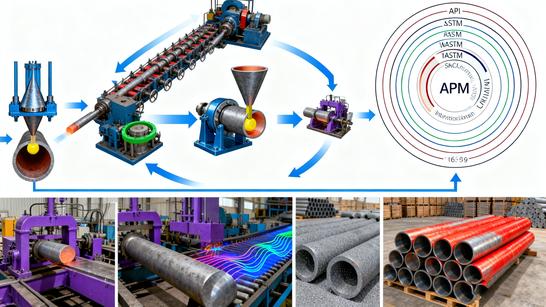
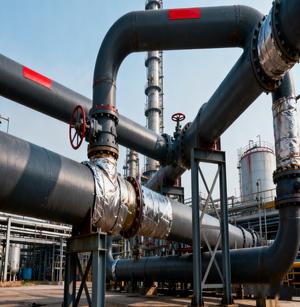
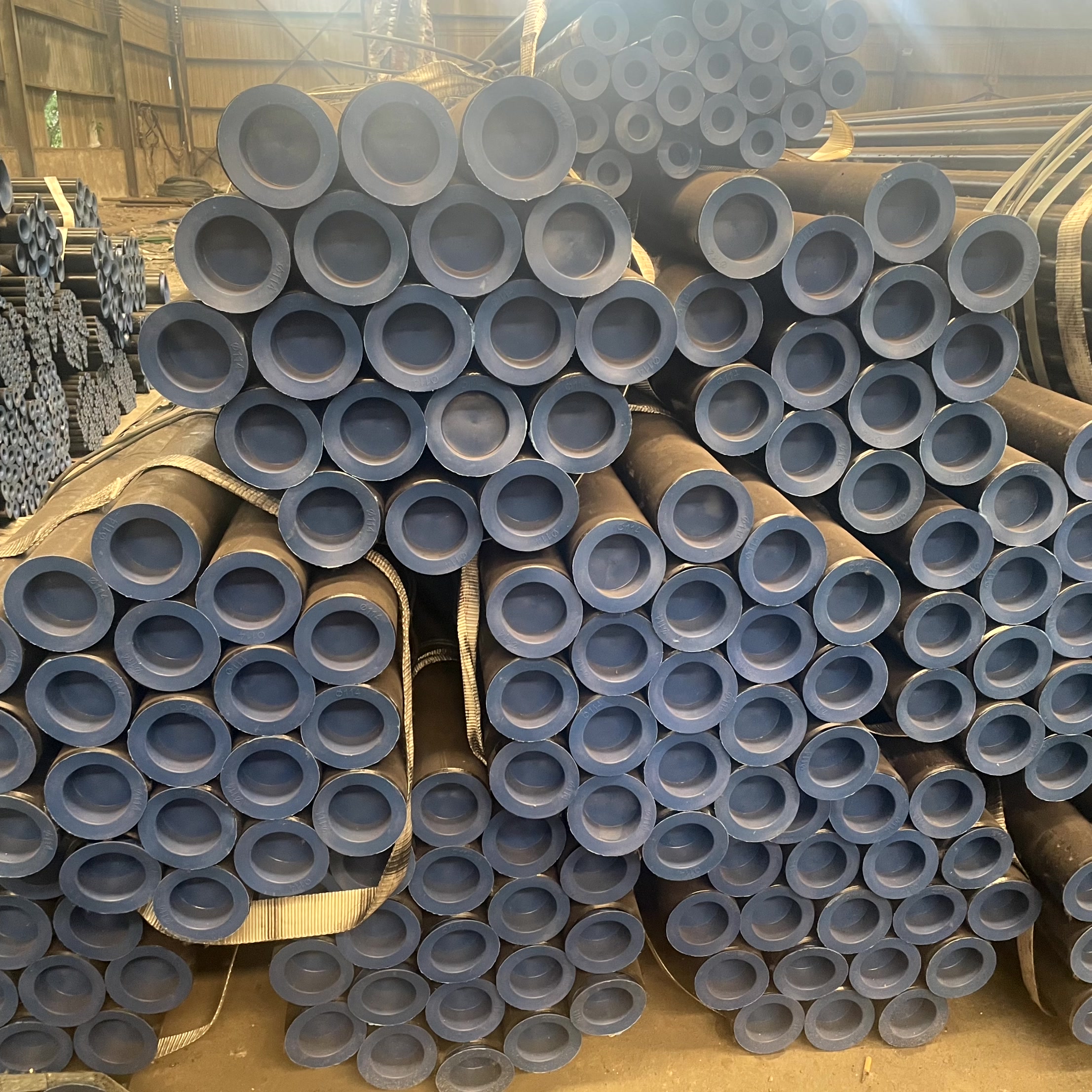
In the realm of industrial manufacturing, seamless steel pipes hold a pivotal position due to their wide - ranging applications in sectors such as oil and gas, power generation, automotive, and construction. These pipes are required to operate under extreme conditions, including high pressure, high temperature, and corrosive environments. Quality control, therefore, becomes an integral and indispensable part of seamless steel pipe production. It serves as a comprehensive system of checks and balances that ensures every pipe leaving the production line meets the specified dimensions, mechanical properties, and surface finish requirements. This article will delve deeply into the various quality control measures employed in the production of seamless steel pipes and elucidate their paramount importance in guaranteeing the reliability and high - performance of the final product.
1.Dimensional Inspection
Dimensional inspection stands as one of the initial and most fundamental quality control measures in the production of seamless steel pipes. The dimensions of a pipe, namely its diameter, wall thickness, and length, are critical parameters that directly influence its functionality in the intended application.
The diameter of the pipe must be precisely controlled to ensure proper fitment in the pipeline system. For instance, in an oil and gas pipeline, if the diameter of the seamless steel pipe is larger or smaller than the specified value, it can lead to issues such as improper flow of the fluid, increased pressure drop, and potential leakage at the joints. To measure the diameter accurately, high - precision measuring instruments like calipers are commonly used. Calipers can provide measurements with an accuracy of up to a fraction of a millimeter, allowing for strict adherence to the specified tolerances.
Wall thickness is another crucial dimension. A uniform wall thickness is essential for the pipe to withstand the internal pressure and external mechanical stresses evenly. If the wall thickness varies along the length of the pipe, stress concentrations can occur at the thinner sections, leading to premature failure. Micrometers are often employed to measure the wall thickness at multiple points around the circumference and along the length of the pipe. This comprehensive measurement approach helps in identifying any non - uniformities and taking corrective actions during the production process.
Length measurement is also important for ensuring that the pipes can be properly installed and connected in the pipeline system. Gauges are used to measure the length of the pipes accurately, and any pipes that fall outside the specified length tolerances are either trimmed or rejected.
Overall, dimensional inspection is crucial because pipes that are outside the specified dimensions may not fit properly in the intended application, which can disrupt the entire system's operation. Moreover, non - compliant dimensions can also prevent the pipe from withstanding the required pressure and stress, posing significant safety risks.
2.Mechanical Testing
Mechanical testing is a set of procedures aimed at verifying the pipe's strength and toughness, which are essential for its performance under real - world conditions.
Tensile testing is one of the most common mechanical tests performed on seamless steel pipes. In this test, a sample of the pipe is subjected to a gradually increasing tensile force until it fractures. The results of the test provide valuable information about the pipe's yield strength, ultimate tensile strength, and elongation. Yield strength indicates the point at which the pipe begins to deform plastically, while ultimate tensile strength represents the maximum force the pipe can withstand before breaking. Elongation measures the pipe's ability to stretch without cracking, which is an important indicator of its ductility. For example, in a high - pressure boiler application, the pipe must have a high yield strength to prevent deformation under the internal pressure and sufficient elongation to absorb any thermal expansion without cracking.
Impact testing is used to measure the pipe's ability to absorb energy during a sudden impact. This is particularly relevant for pipes used in environments where they may be subjected to dynamic loads, such as in earthquake - prone areas or in machinery with moving parts. A standard impact test involves striking a notched sample of the pipe with a pendulum hammer and measuring the energy absorbed during fracture. Pipes with high impact resistance are less likely to fail catastrophically under sudden impact loads.
Hardness testing measures the pipe's resistance to indentation or scratching. Different hardness testing methods, such as Rockwell hardness testing or Brinell hardness testing, are used depending on the type of pipe and the required level of accuracy. Hardness is an important property as it can affect the pipe's wear resistance and its ability to withstand abrasive forces. For example, in a mining application where the pipes are used to transport abrasive slurries, a higher hardness is desirable to reduce wear and extend the pipe's service life.
These mechanical tests help to ensure that the pipe meets the required mechanical properties for its intended application, thereby enhancing its reliability and performance.
3.Chemical Analysis
Chemical analysis is a critical quality control measure that determines the pipe's chemical composition, ensuring it meets the required standards. The chemical composition of the pipe has a profound impact on its mechanical properties, corrosion resistance, and other characteristics.
Spectroscopic methods, such as optical emission spectroscopy (OES) and X - ray fluorescence (XRF), are commonly used for chemical analysis. OES works by exciting the atoms in the sample using an electrical discharge or laser, and then measuring the characteristic wavelengths of the emitted light to determine the elemental composition. XRF, on the other hand, uses X - rays to excite the atoms in the sample, and the resulting fluorescence is measured to identify the elements present.
The chemical composition of the pipe is carefully controlled during the steel - making process. For example, the carbon content in the steel affects its strength and hardness. Higher carbon content generally leads to higher strength but can also make the steel more brittle. Manganese is added to improve the steel's hardenability and strength, while silicon acts as a deoxidizer. Sulfur and phosphorus, if present in excessive amounts, can reduce the pipe's ductility and toughness.
Pipes that do not meet the specified chemical composition may not perform as expected in their intended application. For instance, if a pipe intended for a corrosive environment has an insufficient amount of corrosion - resistant elements such as chromium or nickel, it may corrode prematurely, leading to leaks and system failures. Therefore, chemical analysis is essential to ensure that the pipe's composition is optimized for its specific application.
4.Non - Destructive Testing (NDT)
Non - destructive testing (NDT) methods are employed to detect internal and surface defects in seamless steel pipes without causing any damage to the pipes themselves. These methods are crucial as they can identify defects that may not be visible during visual inspection and can prevent the use of defective pipes in critical applications.
Ultrasonic testing is one of the most widely used NDT methods. It uses high - frequency sound waves to detect internal defects such as cracks, inclusions, and porosity. The sound waves are transmitted into the pipe, and any reflections or echoes from internal flaws are detected and analyzed. By analyzing the time of flight and amplitude of the echoes, the location, size, and nature of the defects can be determined. Ultrasonic testing is highly sensitive and can detect very small defects, making it suitable for high - quality control requirements.
Radiographic testing, similar to medical X - rays, provides a detailed image of the pipe's internal structure. It uses X - rays or gamma rays to penetrate the pipe, and the resulting image is captured on a film or a digital detector. Radiographic testing can detect internal defects such as cracks, weld defects (in the case of welded pipes, although seamless pipes do not have welds, it can still detect other internal flaws), and inclusions. This method is particularly useful for detecting defects in complex - shaped pipes or pipes with thick walls.
Magnetic particle testing is used to detect surface and near - surface defects in ferromagnetic pipes. The pipe is magnetized, and if there are any surface or near - surface defects, the magnetic field lines will leak out at the defect sites. Ferromagnetic particles are then applied to the surface of the pipe, and they are attracted to the leakage fields, forming visible indications of the defects. This method is simple, fast, and cost - effective for detecting surface cracks and other defects.
In conclusion, quality control in seamless steel pipe production is a multi - faceted and comprehensive process that involves dimensional inspection, mechanical testing, chemical analysis, and non - destructive testing. Each of these measures plays a crucial role in ensuring that the pipes meet the specified requirements and are reliable and high - performing in their intended applications. By implementing a robust quality control system, manufacturers can produce seamless steel pipes that meet the stringent demands of various industries, thereby contributing to the safety and efficiency of industrial operations.
【Back to Seamless Steel Pipe: A Comprehensive Guide to Construction, Manufacturing, and Supply】